
What Is Stonewalling and Why Does My Partner Do It?
You're mid-conversation, voice steady, trying to work something out — and your partner just goes quiet. No response, no eye contact, sometimes they leave the room entirely. If you've searched what is stonewalling and why does my partner do it, you already know how confusing and lonely that silence feels. Stonewalling is a real, well-documented pattern in relationship research, not just "being difficult." It's also one of the clearest predictors of long-term relationship strain when it happens often. Some couples work through it with a therapist; others use structured daily practice — apps like Cuddle build repair conversations into a five-minute daily habit — but understanding the pattern comes first.

Emotional Intimacy Definition and What Stonewalling Blocks
Stonewalling is what happens when one partner withdraws from a conversation — going silent, shutting down, or physically leaving — instead of engaging. Dr. John Gottman identified it as one of the "Four Horsemen" that predict relationship breakdown, alongside criticism, contempt, and defensiveness. In his research following newlywed couples over several years, stonewalling appeared far more often in relationships that later separated than in those that stayed together. Stonewalling isn't the same as taking a calm break to cool off. It's an abrupt, often unexplained withdrawal that leaves the other partner talking to a wall, and it tends to show up more from men in heterosexual couples, though it happens in every relationship configuration.
To understand why stonewalling hurts so much, it helps to know the emotional intimacy definition it violates. Emotional intimacy means feeling safe enough to share your inner world — fears, needs, half-formed thoughts — and trusting your partner will stay present for it. So what is emotional intimacy in practice? It's built moment by moment, through small exchanges where both people show up. Stonewalling does the opposite: it removes presence exactly when it's needed most, and repeated instances create a lack of intimacy that compounds over months.
Why Does My Partner Stonewall Me? Common Causes
Most people who stonewall aren't trying to punish you — they're flooded. Gottman's research found that during conflict, a stonewalling partner's heart rate can spike above 100 beats per minute, triggering a fight-or-flight response that makes rational conversation nearly impossible. Shutting down becomes the nervous system's exit ramp, not a calculated strategy. Recognizing this doesn't excuse the behavior, but it does explain it.
Other common roots include growing up in a household where conflict felt dangerous, past relationships where speaking up backfired, or simple exhaustion after repeated arguments about the same unresolved issue. In my experience talking with couples about this pattern, stonewalling often shows up hand-in-hand with a specific complaint: "there's a constant power struggle between us." When neither partner feels safe enough to soften first, silence becomes the default weapon, even when nobody intends it that way. I've also noticed it spikes around major life transitions — a new baby, a cross-country move, a job loss — when both partners are already running on empty and have less patience left for hard conversations.
Signs of Stonewalling vs Non Sexual Intimacy Breakdown
Stonewalling usually looks like one-word answers, sudden topic changes, physically leaving mid-discussion, or a blank stare that says "I'm done here." It's different from platonic intimacy or non sexual intimacy simply fading over time — that decline tends to be gradual, showing up as less hand-holding, fewer check-in texts, or shorter conversations before bed. Stonewalling is sharper and more sudden, usually tied to a specific conflict moment, and it often ends the conversation entirely rather than just cooling its tone. Watch for the pattern repeating across weeks: if the same topic gets shut down three or four times running, that's a habit, not a one-off bad night.
Both patterns, though, chip away at the same foundation. Emotional intimacy examples — sharing a worry before it becomes a crisis, admitting you were wrong first, asking your partner how their day actually felt — require both people showing up. When one partner consistently checks out, the other often ends up saying "i feel like im the only one making an effort," and that imbalance is exhausting to carry alone.
Long Distance Relationship Struggles Make Stonewalling Worse
Long distance relationship struggles add a cruel twist to stonewalling: when you're not in the same room, silence can mean anything. A partner who goes quiet mid-text might just be busy, or they might be shutting down entirely — and without body language to read, anxiety fills the gap fast. Knowing how to make a long distance relationship work often starts with agreeing on what silence means before it happens, not guessing after the fact. A simple rule helps: if you need more than an hour before responding to something serious, say so first, even in two words — "need time." That tiny signal prevents the spiral of wondering whether you're being punished.
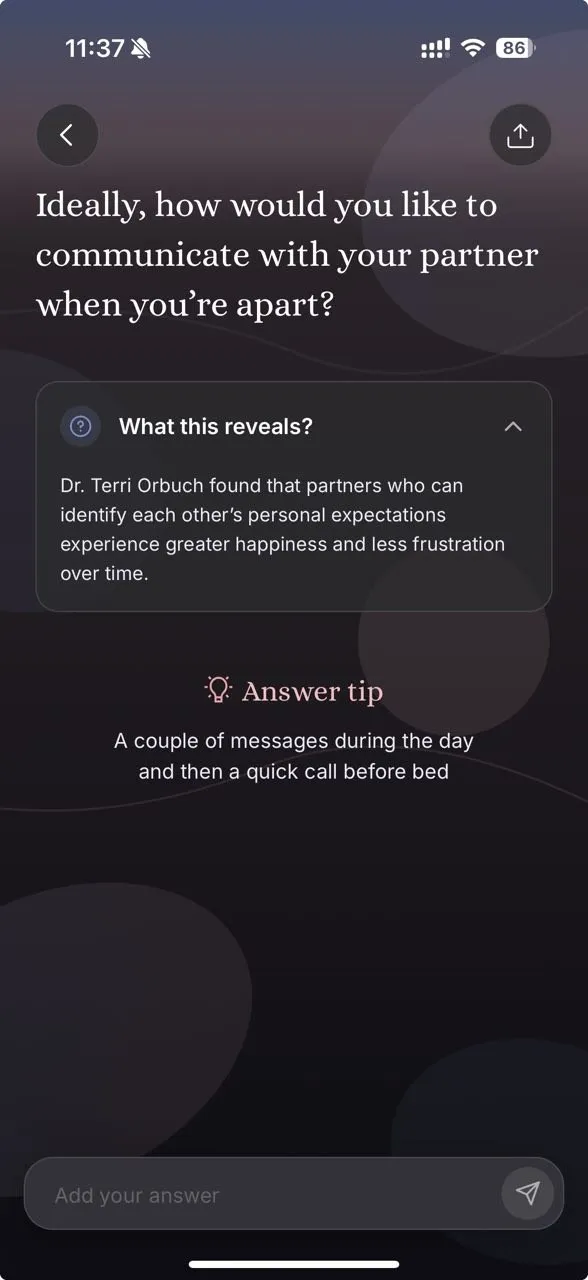
This is one area where structured tools can genuinely help rather than replace the hard conversation. If you want a low-pressure way to build back-and-forth honesty across distance, Cuddle's daily questions give both partners a shared, async prompt to answer separately before comparing notes — useful groundwork before tackling a stonewalling pattern head-on. Books like Sue Johnson's "Hold Me Tight," built on Emotionally Focused Therapy, cover the same territory in more depth, and a licensed couples therapist remains the right call when stonewalling is frequent or severe.
How to Improve Intimacy After a Stonewalling Pattern
The Gottman Institute recommends a structured pause: name that you're flooded, agree on a specific return time (twenty minutes minimum), and use that window to physically self-soothe instead of rehearsing arguments in your head. This single habit, practiced consistently, is one of the most effective ways to learn how to improve intimacy after repeated shutdowns become the norm.
Rebuilding also means addressing sexual intimacy definition gaps that stonewalling creates — physical closeness often dries up alongside emotional withdrawal, since one rarely recovers without the other. Figuring out how to increase physical intimacy in a relationship usually starts with small, low-stakes touch: a hand on the shoulder, a hug that lasts past the first three seconds. Couples asking how to rekindle romance in marriage after years of conflict often find that consistency beats intensity — a five-minute daily check-in outperforms one dramatic date night. I've seen couples make more progress from ninety consecutive days of small check-ins than from a single expensive weekend away, simply because the small habit rebuilds trust that the other person will actually show up.
If you're wondering how to spice up intimacy once the silent-treatment cycle finally breaks, resist rushing straight to grand gestures. Start smaller: ask an honest question and actually wait for the answer. That single act — waiting, listening, not flinching — is often the repair a stonewalling partner needs to feel safe enough to stay present next time.
Stonewalling rarely means your partner has stopped caring. More often, it means they've run out of tools for staying present under stress. Understanding the difference between a nervous system in overload and genuine indifference changes how you respond — with curiosity instead of retaliation. That shift, practiced consistently, is what eventually turns a shutdown pattern back into a conversation.
Want a Daily Repair Habit?
A five-minute daily practice built on Gottman and EFT research, for couples working through disconnect.
Explore Cuddle's Daily PromptsDisclosure: This page contains affiliate links. We may earn a commission at no extra cost to you.