
How to Build Emotional Intimacy in a Relationship
Emotional intimacy is the sense of closeness you feel when you can share your real thoughts, fears, and needs with your partner and trust you'll be met with understanding instead of judgment. If you've been searching for the emotional intimacy definition, that's the short version: safety plus honesty, repeated over time. This guide covers how to build emotional intimacy step by step, why it fades, and how couples rebuild it even when life gets in the way. I've spent years covering relationship research, and one pattern keeps showing up: couples who protect five minutes a day for real conversation stay closer than couples waiting for a free weekend that never comes. Whether you're newly together, married for a decade, or navigating a long distance stretch, the mechanics of building emotional intimacy stay largely the same. If you want a structured way to practice this daily, apps like Cuddle build the habit around short, guided check-ins for both partners. This piece leans on established frameworks — Gottman, Emotionally Focused Therapy, and Attachment Theory — rather than one-off opinions, so you can trust the advice holds up beyond a single relationship story.

What Emotional Intimacy Actually Means
Emotional intimacy definition aside, the concept boils down to felt safety. It's the difference between telling your partner about your day and telling your partner what that day actually meant to you — the worry underneath the meeting, the pride underneath the small win. Emotional intimacy examples include admitting you're scared about money, naming a fear from childhood, telling your partner you felt lonely at a party even though they were standing right next to you, or simply saying "I missed you" and meaning it structurally, not casually.
Research from Dr. John Gottman's decades of couple studies found that partners who turn toward each other's small bids for connection, rather than away, build the trust that emotional intimacy depends on — his lab found that couples who stayed together turned toward these bids about 86% of the time, compared to roughly 33% for couples who later divorced. In my experience reviewing relationship apps and frameworks, the couples who describe feeling "truly known" are rarely the ones with the most dramatic gestures. They're the ones with the most repetitions of small, honest moments, stacked daily over months and years. That gap compounds across years, which is why small daily attention pays off disproportionately.
Emotional Intimacy vs Physical and Non Sexual Intimacy
Intimacy isn't one thing — it's several overlapping systems. Non sexual intimacy includes holding hands, sitting in comfortable silence, or texting a genuine check-in during a hard day. Platonic intimacy, the closeness you'd feel with a best friend, actually forms the backbone of a strong romantic bond; couples who lose their friendship first tend to lose their physical closeness next, according to Gottman's research on "friendship as the foundation" of lasting partnerships. Intellectual intimacy — debating ideas, sharing what you're reading, disagreeing respectfully about politics or parenting — deserves its own attention too, since it's often the first layer to fade when couples get busy.
Sexual intimacy definition matters here too: it's not just physical acts but the vulnerability and communication that surround them. Couples often ask how to increase physical intimacy in a relationship, and the honest answer usually starts with emotional safety first. It's hard to feel desire toward someone you don't currently feel close to, so working on the emotional layer often improves the physical one as a side effect, not a separate project. A 2022 study published in the Journal of Sex Research found that couples reporting higher emotional intimacy also reported significantly higher sexual satisfaction, regardless of how often they had sex — which suggests frequency matters less than most couples assume.
Why Emotional Intimacy Fades
Lack of intimacy rarely shows up overnight. It usually creeps in through unanswered bids for attention, unresolved arguments that get buried instead of repaired, and the sheer logistics of work, kids, and screens competing for the same twenty minutes of evening energy. The Gottman Institute has found couples typically wait about six years of being unhappy before seeking help for relationship problems — plenty of time for small gaps to calcify into habits neither partner remembers choosing. By the time most couples reach out for outside help, the disconnection already feels familiar rather than alarming.
Attachment wounds play a role too. Someone with an anxious attachment style might chase closeness in ways that push a partner away, while an avoidant partner might withdraw right when connection is needed most. Naming the pattern out loud — "I think I shut down when I feel criticized" — is often the first real step toward how to improve intimacy, because you can't fix what neither of you can see. Couples therapists trained in Attachment Theory or Emotionally Focused Therapy spend much of their early sessions just helping partners name these cycles clearly, since most people can describe their partner's pattern long before they can see their own.
How to Build Emotional Intimacy Day to Day
Building emotional intimacy works best as a daily habit, not an occasional deep talk. Start with one specific, honest share each day: a worry, a want, or a small joy. Follow it with a genuine question back to your partner, and actually listen to the answer instead of planning your reply. Therapists trained in Emotionally Focused Therapy call this a "bid and response" cycle, and it's the mechanical core of how to build emotional intimacy over months, not weeks. Ten minutes before bed, phones face-down, is enough to start.
Second, repair fights instead of just ending them. A short debrief — what triggered it, what you each needed, what you'll try next time — does more for closeness than avoiding the topic ever will. Third, protect novelty. Trying a new activity together activates the same brain chemistry as early dating, according to research from psychologist Dr. Arthur Aron on shared novel experiences and relationship satisfaction; his 1997 studies found that couples who did unfamiliar, mildly challenging activities together reported measurably higher relationship quality afterward than couples who did familiar, comfortable ones. Even a new hiking trail or an unfamiliar recipe counts.
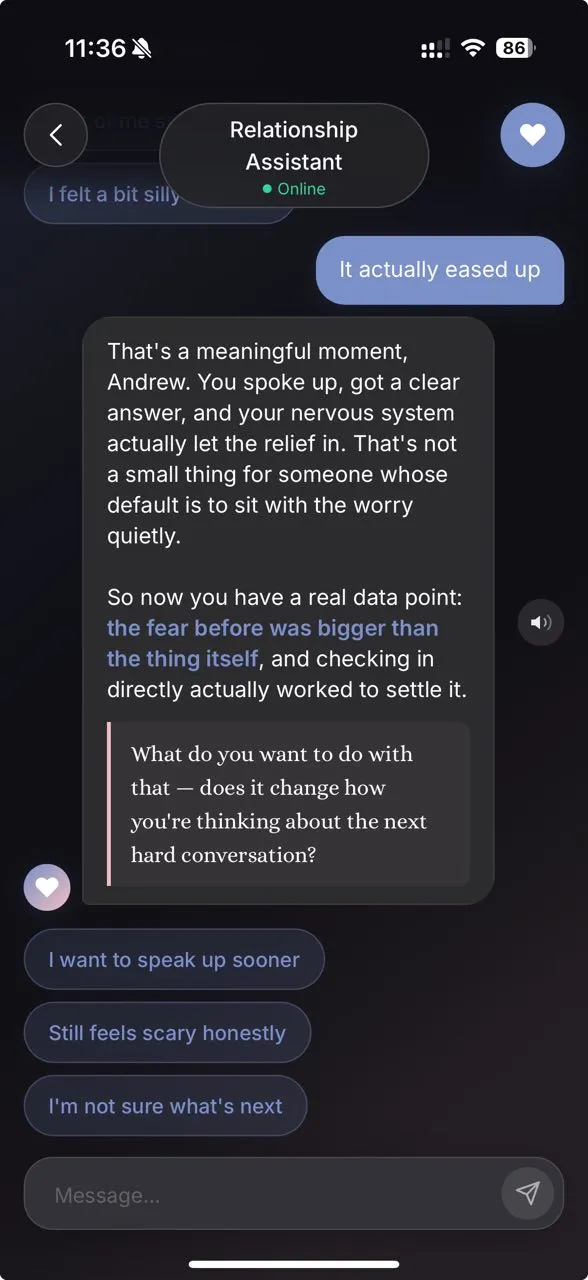
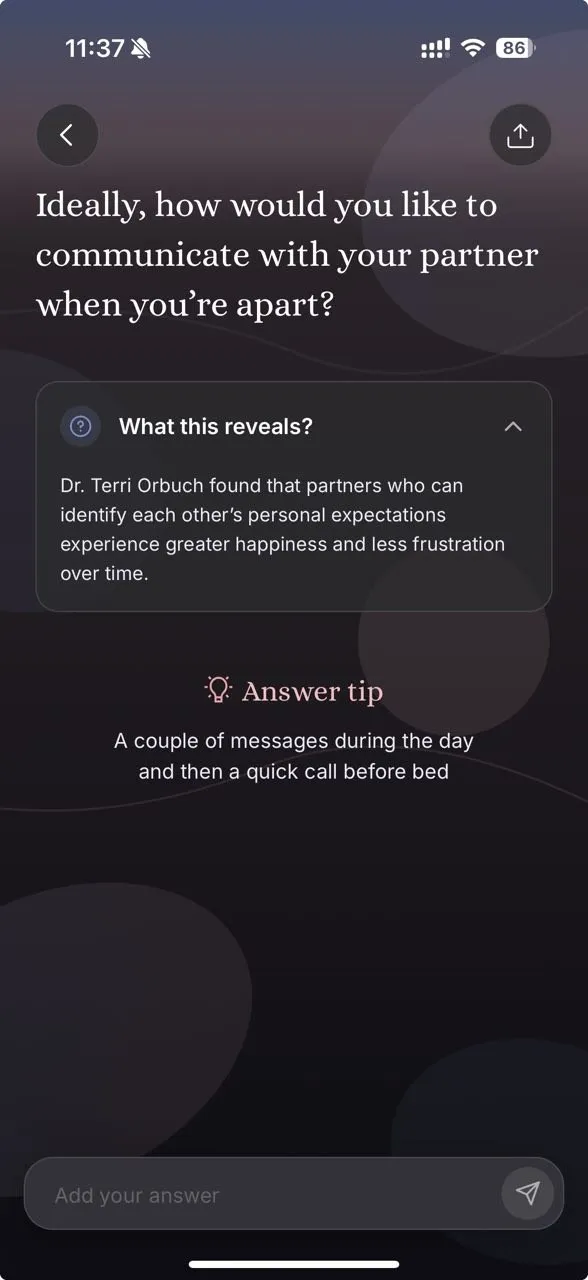
Not every couple wants to build this habit alone, and that's fair — some prefer a therapist, a shared book like Sue Johnson's "Hold Me Tight," or a structured app. If you're looking for something to lean on between conversations, Cuddle's daily questions and guided courses are one option worth exploring, alongside couples therapy or a communication framework like the Gottman Method's "Love Maps" exercise.
Long Distance Relationships and Emotional Intimacy
Long distance relationship struggles usually center on the same problem: fewer small, unplanned moments of connection. Learning how to make a long distance relationship work often means replacing spontaneous closeness with scheduled closeness — a nightly call, a shared show watched "together" on a video call, or a daily question you both answer separately before comparing notes. The absence of casual, in-person touch makes emotional check-ins carry more weight than they would for co-located couples.
In my experience looking at what actually keeps long-distance couples close, consistency beats intensity every time. A five-minute daily check-in outperforms a marathon three-hour call once a week, mostly because it keeps both partners inside each other's daily context instead of catching up on a backlog. Sharing small logistics — what you ate, a coworker story, a passing worry — keeps the relationship feeling present instead of like a weekly status report. Video calls help, but even a two-line text exchange throughout the day keeps the thread of closeness from going quiet.
Rekindling Romance and Physical Closeness Long-Term
How to rekindle romance in marriage is one of the most common questions long-term couples ask, and the answer rarely involves a grand gesture. Small, repeated rituals — a real goodbye kiss, a compliment said out loud, a weekly date that isn't just errands — rebuild the emotional intimacy that makes physical closeness feel natural again instead of obligatory. Couples married more than a decade often say the spark didn't disappear so much as get buried under logistics.
If you want to know how to spice up intimacy without forcing it, start by talking about desire directly instead of hinting. Couples who name what they want, and what's changed since earlier in the relationship, report closing the gap faster than couples who wait for their partner to guess. Intellectual intimacy — debating ideas, sharing what you're reading, disagreeing respectfully — often reignites the deeper connection that physical intimacy needs to feel worthwhile, especially for couples past the ten-year mark who feel more like roommates than partners. Curiosity about who your partner is becoming, not just who they were, keeps this layer alive.

None of this requires perfection. Building emotional intimacy is less about getting every conversation right and more about showing up consistently enough that your partner learns they can count on you. Is it worth the daily effort? Every long-term couple I've studied who describes feeling close says yes — start with one honest sentence tonight, and the rest tends to follow. If a specific wound feels too big for daily habits alone — infidelity, unresolved resentment, a trust rupture — a licensed couples therapist remains the better first call than any app or article.
Every couple's timeline looks different. Some notice more ease within a couple of weeks of consistent small habits; others need a few months, especially after a longer stretch of distance or unresolved conflict. What matters most is the direction, not the speed.

Want a Daily Intimacy Ritual?
Five minutes a day of guided questions and coaching, built for two real people.
Explore Cuddle's Daily GuideDisclosure: This page contains affiliate links. We may earn a commission at no extra cost to you.