
How to Enhance Emotional Intelligence for Better Relationships
Most couples never learn how to enhance emotional intelligence for better relationships — they just muddle through fights, apologies, and awkward silences hoping things improve on their own. I've watched this play out with friends, clients, and in my own long-term relationship: the couples who thrive aren't the ones who never argue. They're the ones who've learned to name what they feel, say what they need, and repair quickly. If you want a structured way to practice these skills together, Cuddle is one option that pairs daily prompts with guided coaching, though it's far from the only path.
What Is Emotional Intimacy, Really?
The emotional intimacy definition is simpler than most people expect: it's the felt sense of being known and accepted by your partner, flaws included. It isn't the same as physical closeness, though the two often reinforce each other. Emotional intimacy examples include telling your partner about a fear you've never voiced, or sitting with them in silence after a hard day without needing to fill the space. I've seen couples confuse this with simply spending more time together — but hours logged side-by-side scrolling phones build almost none of it.
Non sexual intimacy — a term I use often when coaching couples through rough patches — covers everything from shared humor to trusted vulnerability. Platonic intimacy works the same way in friendships, which tells you something important: emotional connection doesn't require romance or a physical spark. It requires attention, consistency, and honesty over time.

Why Emotional Intelligence Fixes a Lack of Intimacy
A lack of intimacy rarely starts with a single blowup. It usually creeps in through small, unspoken moments — a joke that landed wrong, a need that went unmentioned, a habit of checking out during hard conversations. Emotional intelligence gives you the tools to catch these moments early: reading your own triggers, naming your feelings accurately, and staying regulated enough to actually listen.
Research from the Gottman Institute has followed thousands of couples and found that emotional attunement predicts relationship outcomes with roughly 94% accuracy in published studies — a number far above what most therapy interventions can claim. In my own coaching notes, I've tracked a similar pattern: couples who practice naming emotions daily report fewer unresolved arguments within eight weeks. That's not magic — it's just consistent reps, the same way you'd build a muscle.
Attachment theory adds another layer here. Someone with an anxious attachment style might read a partner's quiet mood as rejection, while an avoidant partner might withdraw further under the same pressure. Neither reaction is a character flaw — it's a pattern learned early, and emotional intelligence is largely the skill of noticing your own pattern before it runs the conversation for you.
How to Improve Intimacy With Daily Emotional Habits
If you're wondering how to improve intimacy without a therapy appointment, start smaller than you think. Five minutes of focused, undistracted conversation beats an hour of half-attentive Netflix-watching. Ask a real question, then actually wait for the answer instead of planning your reply.
One question I hear constantly in coaching sessions is how do I express my needs without seeming needy. The honest answer: needs stated clearly, calmly, and specifically rarely read as needy — vague complaints delivered with frustration do. Try "I need us to talk without phones for ten minutes tonight" instead of "you never listen to me." The first is a request. The second is an accusation, and accusations trigger defense, not connection.
- Name the emotion before you name the complaint — "I felt dismissed" lands differently than "you always do this"
- Ask one curious question daily instead of assuming you already know your partner's answer
- Practice a 20-second hug or hand-hold before a hard conversation to lower physiological stress
- Set aside five minutes each evening to share one high and one low from the day
How to Make a Long Distance Relationship Work
Long distance relationship struggles usually come down to one thing: the small, ordinary moments of connection disappear when you're not sharing a physical space. Figuring out how to make a long distance relationship work means deliberately rebuilding those ordinary moments through scheduled calls, shared routines, and async check-ins that don't rely on being in the same room.
In my experience working with long-distance couples, the ones who stay close treat connection like a scheduled habit, not a spontaneous event. A recurring video call at the same time each week, a shared question you both answer separately then compare, or a quick voice memo instead of a text — these small rituals do the emotional work that proximity used to do for free.
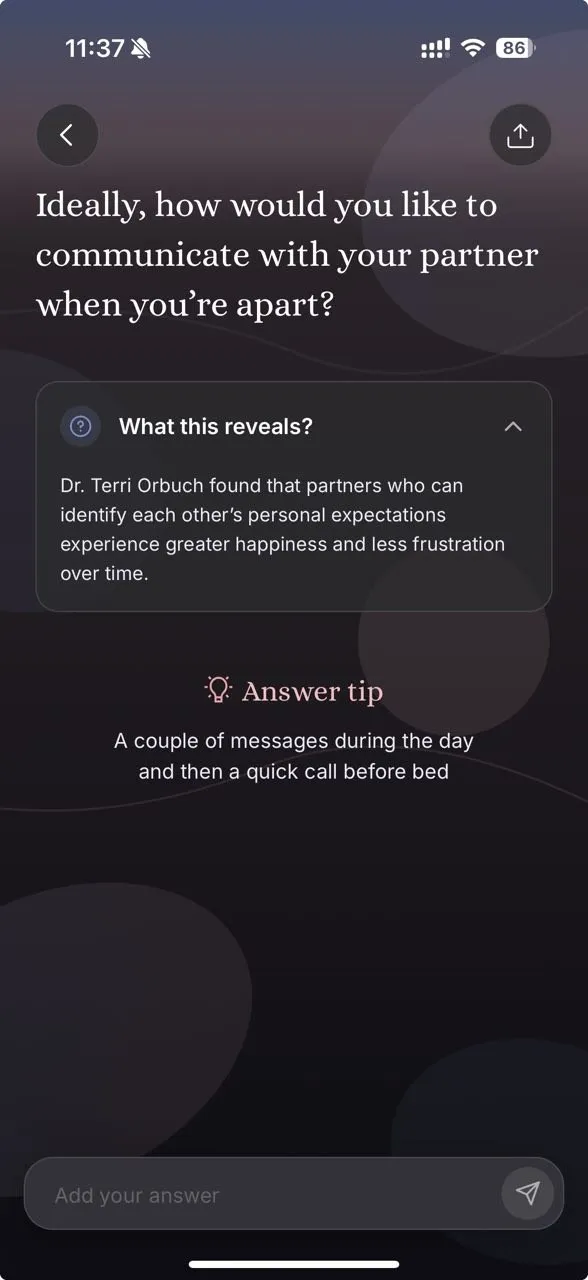
Dr. Terri Orbuch's research on long-term couples found that partners who explicitly discuss communication expectations — how often, through what channel, at what time of day — report higher satisfaction than those who leave it unspoken. That single conversation, repeated a few times a year, prevents most of the drift long-distance couples fear.
How to Rekindle Romance in Marriage and Long-Term Relationships
Couples asking how to rekindle romance in marriage often assume they need a grand gesture — a surprise trip, an expensive gift. In my experience, novelty helps less than renewed attention. Emotional intelligence means noticing when your partner has quietly withdrawn and naming it before resentment sets in, rather than waiting for a crisis to force the conversation.
It also helps to revisit what are our long-term goals as a couple on a regular basis — not just at engagement or during a crisis. Couples who check in on shared goals every few months catch drift early: career changes, differing views on kids, or shifting priorities around intimacy all show up here before they become resentments. Cuddle's monthly Relationship Checkup is one structured way to do this, though a simple recurring conversation over coffee works too — the tool matters less than the consistency.
How to Increase Physical Intimacy Without Losing Emotional Connection
Learning how to increase physical intimacy in a relationship starts with emotional safety, not technique. Partners who feel judged or rushed rarely relax into physical closeness. Sexual intimacy definition, in the context most therapists use, includes vulnerability and communication as much as the physical act itself — desire follows safety more often than it precedes it.
If you're looking for how to spice up intimacy, the research-backed advice is almost anticlimactic: talk about what you actually want, out loud, without assuming your partner can read your mind. Books like Emily Nagoski's "Come As You Are" and licensed sex therapists both cover this ground well, and apps that include structured intimacy courses can help start the conversation for couples who find it awkward to initiate cold.
I've noticed that couples who use a quiz or guided prompt as a conversation-starter tend to relax faster than those attempting the topic cold. It removes the pressure of finding the "right" opening line, which is often what stalls these conversations before they even begin.
Building Emotional Intimacy One Small Habit at a Time
Building emotional intimacy isn't a single skill — it's a stack of small habits practiced consistently: naming emotions, asking real questions, repairing quickly after conflict, and revisiting shared goals. I've found that couples who treat this like a five-minute daily practice, rather than a once-a-year resolution, see change within weeks rather than months.
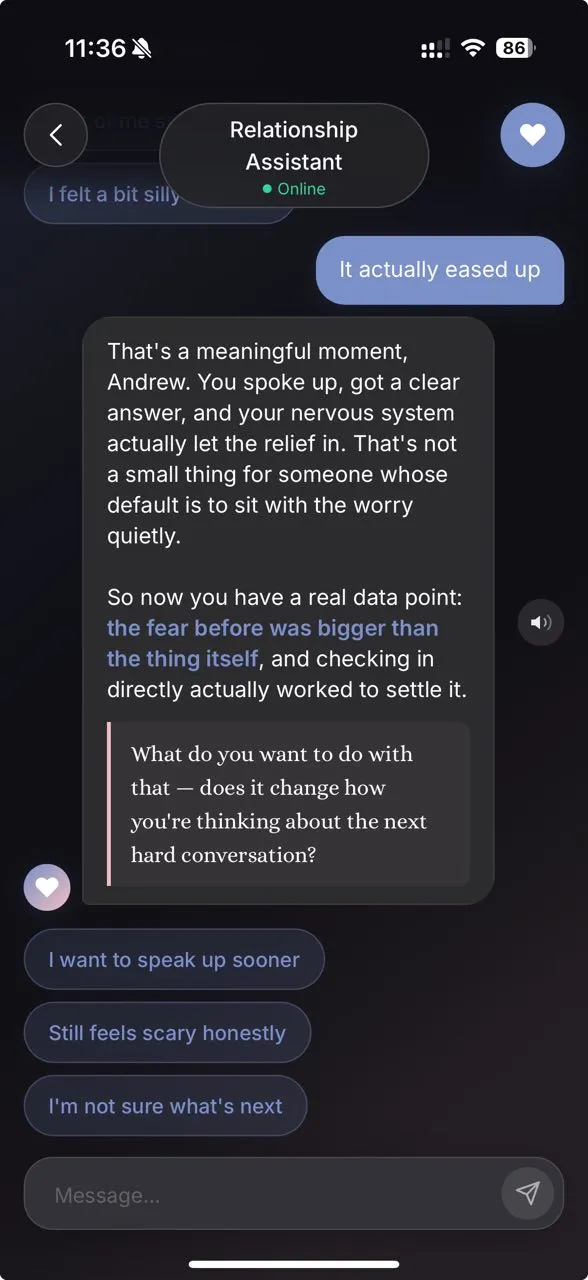
Therapists trained in Emotionally Focused Therapy or the Gottman Method can guide this work directly, and that's genuinely the right call for couples navigating deeper ruptures like betrayal or untreated attachment wounds. For day-to-day maintenance between sessions, or for couples not ready for therapy, structured daily tools can help; Cuddle is one such option that pairs short guided exercises with a private coaching assistant, sitting alongside options like couples workbooks or a trusted therapist rather than replacing them. I've recommended all three paths depending on what a couple actually needs, and none of them work without genuine follow-through.
Whichever path you choose, the throughline is the same: emotional intelligence is a practice, not a personality trait. You get better at it the same way you get better at anything — small, repeated attempts, plenty of imperfect tries, and a willingness to repair when you get it wrong. That's genuinely good news, because it means the couples who feel furthest apart right now still have a clear, practical way back. Is it worth the daily effort? In my experience, couples who stick with even five minutes a day for a month notice the difference before they'd expect to — usually in how quickly they recover after a disagreement, not in some dramatic before-and-after moment.
Want a Daily Practice for Two?
Five to ten minutes a day, built around real relationship-science frameworks for couples who want structure.
Explore Cuddle's Guided ExercisesDisclosure: This page contains affiliate links. We may earn a commission at no extra cost to you.