
Feeling Like You're Walking on Eggshells: What It Means & What to Do
If you constantly rehearse sentences before you say them, or you scan his face for a mood before you bring up anything real, you already know the feeling. I feel like I'm walking on eggshells around him is one of the most common phrases relationship counselors hear, and it almost never describes a single fight. It describes a pattern — a low hum of tension that makes you edit yourself down to nothing. In my experience talking with couples about this, the eggshells feeling is usually a symptom of a much bigger gap: a lack of intimacy that's gone unaddressed for months, sometimes years.
This article breaks down what that walking-on-eggshells feeling actually signals, how it connects to emotional intimacy and physical closeness, and what practical steps help rebuild safety. Some couples work through this with a therapist; others use structured daily tools like Cuddle as one option worth exploring alongside their own conversations. Either way, the goal is the same: fewer eggshells, more honest ground to stand on.

What Does 'Walking on Eggshells' Actually Mean?
Walking on eggshells means you're managing someone else's reactions instead of expressing your own needs. You soften your tone before you've even said the sentence. You avoid certain topics — money, his family, how he spends his evenings — because the fallout isn't worth it. If you feel like you're walking on eggshells around you and him both, in the sense that neither of you can bring things up without a fight, that mutual guardedness is a clear lack of intimacy signal, not just a communication glitch.
The phrase itself comes from the image of literal eggshells cracking underfoot — one wrong step and everything shatters. Psychologically, it describes hypervigilance: your nervous system stays on alert, scanning for signs of anger, withdrawal, or criticism. Over time, that vigilance is exhausting. Furthermore, it slowly erodes the sense of safety that intimacy depends on.
What Is Emotional Intimacy — And Why Its Absence Creates Eggshells
The emotional intimacy definition most therapists use is straightforward: the felt sense that you can be fully known by your partner — fears, quirks, unflattering thoughts and all — without being punished for it. So what is emotional intimacy in daily practice? It's the small stuff. It's telling him you're scared about your job without him minimizing it. It's him admitting he's stressed instead of snapping at you for asking why he's quiet.
When that trust is missing, eggshell-walking fills the gap. You stop testing the waters because testing them has gone badly before. Common emotional intimacy examples include sharing a hard memory, admitting you were wrong first, or simply saying 'I missed you' without waiting for him to say it first. None of these require grand gestures — they require consistency, and that consistency is exactly what disappears when tension takes over a relationship.
Building Emotional Intimacy When Trust Feels Shaky
Building emotional intimacy after a period of walking on eggshells starts small. I've found that couples make more progress with one honest five-minute conversation a day than with one big two-hour talk a month. Try naming the pattern out loud: 'I notice I'm holding back before I bring things up. Can we talk about why?' That single sentence does more to improve intimacy than weeks of silent resentment.
Research-backed frameworks like the Gottman Method and Emotionally Focused Therapy both point to the same mechanism: repair after conflict matters more than avoiding conflict altogether. Couples who repair well — apologize specifically, name what hurt, and follow through on change — report far less eggshell-walking than couples who simply go quiet after a fight. If you want a structured way to practice repair conversations daily, Cuddle is one option worth exploring alongside your own check-ins. That's the difference between suppressing tension and actually resolving it.
Non Sexual Intimacy and Platonic Intimacy Matter Too
Intimacy isn't only about sex, and treating it that way is a common mistake. Non sexual intimacy includes things like sitting in comfortable silence, holding hands during a hard conversation, or texting a check-in during a stressful workday. Platonic intimacy — closeness without romantic or sexual charge — often gets overlooked in romantic partnerships, yet it's what makes you feel like teammates rather than roommates who happen to share a bed.
If you always feel like you're bracing for impact, rebuilding this platonic layer first tends to work better than jumping straight to deep vulnerability. Watch a show together without your phones. Cook dinner side by side. These low-pressure moments rebuild the baseline safety that makes bigger emotional conversations possible later.
Sexual Intimacy, Physical Closeness, and How to Spice Up Intimacy
The sexual intimacy definition goes beyond the physical act itself — it includes feeling desired, comfortable being seen, and safe enough to ask for what you want. When eggshell-walking dominates a relationship, physical closeness is often the first thing to fade, since vulnerability requires the same safety that arguments have been chipping away at.
If you're wondering how to increase physical intimacy in a relationship that's grown distant, start outside the bedroom. Non-demand touch — a hand on the back, a long hug before bed — rebuilds comfort without pressure. Once that baseline returns, couples often ask how to spice up intimacy specifically; the honest answer is usually communication first, novelty second. Naming a fantasy or trying a new routine works far better once both partners already feel emotionally safe saying no without consequence.

Long Distance Relationship Struggles and Eggshell-Walking
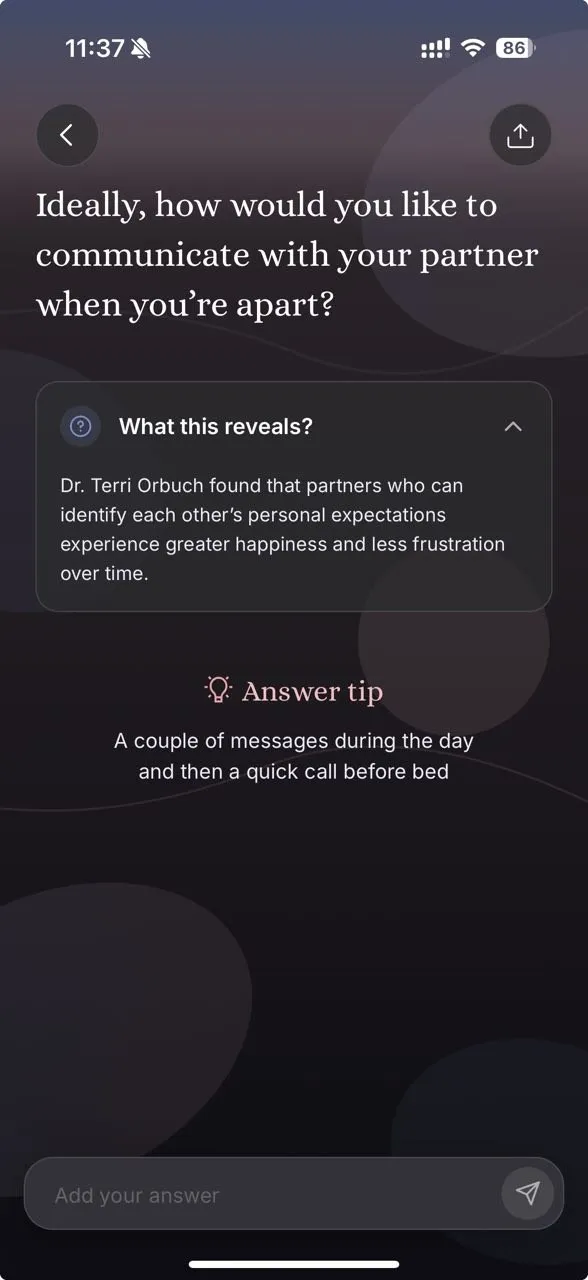
Long distance relationship struggles add a unique twist to this feeling. Without daily in-person cues, small misunderstandings via text can spiral fast, and you end up walking on eggshells around him through a screen — worried a delayed reply means something's wrong. If you're figuring out how to make a long distance relationship work, predictable communication rhythms help more than constant contact. A quick morning text and a real evening call beat scattered messages all day.
In my experience, long-distance couples who use structured daily check-ins — whether that's a shared journal, a scheduled call, or a guided app — report feeling less anxious between conversations. Tools built for this, like a daily-questions feature in a relationship app, work well for staying emotionally in sync across time zones without adding pressure to every single text.
How to Rekindle Romance in Marriage After the Eggshells Set In
Longer relationships have their own version of this problem. Learning how to rekindle romance in marriage after years of walking carefully around each other usually starts with lowering the stakes, not raising them. Skip the big anniversary gesture and try a five-minute daily habit instead — a genuine compliment, a shared laugh, a question that isn't about logistics.
Couples counselor and author John Gottman's research suggests that small, repeated bids for connection matter more than occasional big romantic events. Turning toward those bids — instead of ignoring them because you're braced for conflict — is often how to improve intimacy without needing a dramatic turning point. It's slow work, but it's steady, and steady is what eggshells can't survive.
Want a Daily Nudge Toward Safety?
Five minutes a day, guided prompts, built for two real people rebuilding trust.
Explore Cuddle's Long-Distance GuideOne more pattern worth naming directly: if the phrase running through your head lately is 'you always put work before our relationship,' that resentment often travels alongside the eggshells feeling. Both point to the same root cause — unmet needs that never got voiced clearly. Naming the specific need ('I want one uninterrupted hour together tonight') works better than the general complaint, and it's far less likely to trigger the defensiveness that keeps the eggshells cycle going.
Disclosure: This page contains affiliate links. We may earn a commission at no extra cost to you. Not medical advice. Consult a licensed therapist for relationship crises, abuse, or mental health concerns.