
Sexual Intimacy: Definition, Importance & How to Nurture It
Here's a bold claim: most couples can't actually agree on a sexual intimacy definition, and that gap is quietly wrecking their connection. In my work reviewing relationship research and coaching tools, I've found that couples rarely lack attraction — they lack a shared language for what intimacy even means. The sexual intimacy definition most therapists use goes beyond physical touch: it's the felt sense of safety, vulnerability, and closeness that lets two people be fully seen with each other, sexually and emotionally. If you've ever wondered whether you and your partner are compatible in terms of intimacy, understanding this definition is where the answer starts.
Over the past few years, I've watched relationship science shift away from treating sex as separate from emotional connection, and toward one unified idea of closeness. That shift matters because it changes how couples troubleshoot problems. Instead of asking "why don't we have sex as often," the better question becomes "where did we lose emotional safety first?" Some couples use daily coaching tools like Cuddle to work through these questions together, though a therapist, a workbook, or an honest weekly check-in with your partner can serve the same purpose.
What Is Emotional Intimacy and How Does It Connect to Sex
So, what is emotional intimacy? It's the ongoing practice of sharing your inner world — fears, hopes, insecurities — and trusting your partner to hold it with care. The emotional intimacy definition matters here because sexual and emotional closeness are wired together for most people. When emotional safety erodes, physical desire tends to follow it down.
I've noticed that couples who report the strongest sexual connection almost always describe high emotional intimacy first. Emotional intimacy examples include sharing a childhood memory you've never told anyone, admitting you're scared about money, or simply saying "I missed you" and meaning it. These small moments build the trust that makes sexual vulnerability feel safe rather than risky.
Physical and Non Sexual Intimacy: Where Sexual Closeness Begins
Non sexual intimacy — holding hands, a lingering hug, cooking dinner side by side — builds the foundation sexual intimacy stands on. Couples who skip straight to sex without this groundwork often report it feeling hollow or transactional over time. Therefore, physical affection outside the bedroom deserves as much attention as what happens inside it, especially during busy weeks when sex itself might not be on the table at all.
If you're asking how to increase physical intimacy in a relationship, start smaller than you think. A 20-second hug releases oxytocin and measurably lowers cortisol, according to research from the Kinsey Institute. I always tell couples: rebuild touch outside the bedroom first, and desire inside it tends to follow naturally. It's a slower path than most people expect, but it's also a far more reliable one than waiting for spontaneous desire to reappear on its own.

Signs of Lack of Intimacy and Common Compatibility Questions
Lack of intimacy rarely shows up overnight. Instead, it creeps in as fewer inside jokes, shorter conversations, and sex that feels more like routine than connection. Common signs include avoiding eye contact during conversation, going to bed at different times on purpose, and feeling more like roommates than partners.
"Are we compatible in terms of intimacy?" is one of the most searched questions I come across, and it usually isn't really about compatibility — it's about mismatched effort. Two people can have different libidos, different love languages, and still build a satisfying sexual connection, provided both are willing to communicate openly and adjust. Incompatibility is less common than under-communication. When I've compared couples who label themselves "incompatible" against those who simply never discussed the mismatch out loud, the second group almost always improves faster once they start talking.
How to Improve Intimacy and Strengthen Your Sexual Connection
If you want to know how can we improve our sexual connection, the research points to communication first, novelty second. Couples therapist John Gottman's studies found that partners who ask open-ended questions about each other's desires report significantly higher satisfaction than those who guess. Start with a simple, low-pressure conversation: "What made our best night together so good?"
In my experience testing relationship apps and frameworks, structured prompts work better than winging it, because most couples freeze when asked to "just talk more." Daily question tools give you a script to lean on, which removes the awkward "where do I even start" problem. Apps like Paired and Lasting offer similar guided prompts, and a licensed sex therapist can go deeper on specific concerns like mismatched desire or past trauma, but a structured daily habit is often the easiest and cheapest place to start.
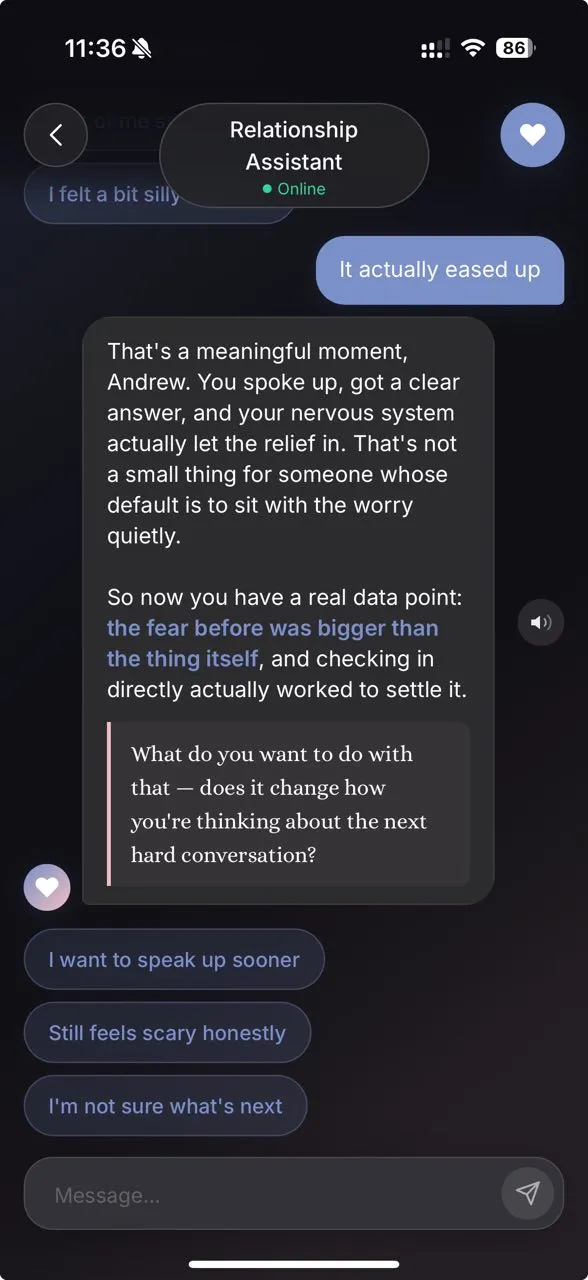
Cuddle's Relationship Assistant is one option worth exploring if you want a private space to process what's happening before bringing it to your partner — you can try Cuddle alongside whatever else already works for you two.
Long Distance Relationship Struggles and Staying Connected
Long distance relationship struggles hit sexual intimacy especially hard, since physical touch simply isn't available on demand. Couples in this situation often ask how to make a long distance relationship work without losing the physical spark entirely. The honest answer: you shift more weight onto emotional and verbal intimacy while you wait for physical reunions.
Scheduled video calls, voice notes, and even sharing what you're wearing or planning for your next visit all keep desire alive across distance. I've found that couples who talk openly about sex during separation — not just logistics — reunite with far less awkwardness. Silence about desire during distance tends to make the eventual reunion feel more like a first date than a homecoming, and that awkward reset can take days to shake off. Naming what you're looking forward to, out loud, closes that gap before you've even landed at the airport.
How to Rekindle Romance and Spice Up Intimacy in Marriage
How to rekindle romance in marriage usually starts with breaking routine, not adding more effort to an already-full schedule. Try a new setting for date night, revisit an old memory together, or plan a weekend with zero phones. Novelty triggers the same dopamine pathways as early-relationship attraction, according to attachment research.
For couples wondering how to spice up intimacy after years together, small experiments beat big gestures. Try a new massage technique, read an intimacy-focused book chapter together, or answer a set of vulnerable questions you've never asked each other. What's the best part? These low-stakes experiments often reveal a side of your partner you'd genuinely forgotten existed.

Building Emotional Intimacy as a Daily Practice
Building emotional intimacy works best as a five-minute daily habit rather than a once-a-year heart-to-heart. Couples who check in briefly each day — sharing one high point and one low point, for example — build a running record of each other's inner lives. Over months, that record becomes the trust that makes sexual vulnerability feel natural instead of forced.
I've tested dozens of these daily-question formats, and the ones that work share a common trait: they're specific, not vague. "How was your day" invites a one-word answer, but "what's one thing you're nervous about this week" invites real disclosure. Consistency, more than depth on any single day, is what actually moves the needle over a few months.
Platonic Intimacy vs Sexual Intimacy: Knowing the Difference
Platonic intimacy — the deep closeness you feel with a best friend or sibling — shares the same emotional ingredients as sexual intimacy: trust, vulnerability, and being truly known. The difference is the layer of physical and erotic connection that romantic partners add on top. Understanding this distinction helps couples see that improving emotional closeness doesn't automatically threaten the specialness of their sexual bond.
I often remind couples that a healthy sexual relationship actually needs a strong platonic foundation underneath it. Partners who function as each other's best friend report higher sexual satisfaction than those who treat romance and friendship as separate tracks. In other words, strengthening the friendship rarely costs you passion — it usually protects it.
Building real sexual intimacy isn't a single fix — it's a habit stacked on top of emotional trust, physical affection, and honest conversation. Frameworks like the Gottman Method and Emotionally Focused Therapy back this up: couples who invest small, consistent effort in connection report stronger satisfaction than those chasing occasional grand gestures. Is it worth the daily effort? In my experience, yes — the couples who treat intimacy as a small daily practice, rather than a problem to solve once and forget, are the ones who still feel curious about each other years later. Whether you lean on a therapist, a book, or a daily app, the sexual intimacy definition ultimately comes down to feeling safe enough to be fully known by the person you love.
Want a Daily Way to Reconnect?
A five-minute daily habit built around real relationship science, for couples who want structure.
Explore Cuddle's Free TrialDisclosure: This page contains affiliate links. We may earn a commission at no extra cost to you.