
Fear of Intimacy: Causes, Signs & How to Overcome It
You want closeness, and yet something in you pulls back the moment it's within reach. That contradiction is the core of fear of intimacy — a pattern where the desire for connection and the fear of it show up at the same time. It doesn't mean you're broken or unlovable. In my experience talking with couples about this exact pattern, fear of intimacy is one of the most common and most misunderstood relationship struggles out there, and it's rarely about the partner sitting across from you. If you want a low-pressure way to start naming these patterns together, Cuddle is one option that walks couples through daily prompts built around exactly this kind of vulnerability.

What Is Fear of Intimacy
Fear of intimacy is the anxious avoidance of emotional or physical closeness, even when a person consciously wants a relationship. It's different from simply being private or introverted. Someone with this pattern might crave connection deeply but still find ways to keep a partner at arm's length — through humor, busyness, or picking fights right when things get tender. Psychologists sometimes describe it as an approach-avoidance conflict: the pull toward connection and the urge to protect yourself from it are both active at the same time, which is exactly why it feels so confusing from the inside.
So what is emotional intimacy, exactly? It's the felt sense of being known and accepted — sharing fears, hopes, and everyday thoughts without needing to perform. Emotional intimacy examples include telling your partner about a childhood memory you've never mentioned, admitting you're scared about a decision, or simply saying "I missed you" without deflecting it into a joke. When fear of intimacy is active, these small moments feel disproportionately risky, so people avoid them instead of leaning in. Over time, that avoidance becomes the habit, even after the original threat has long since passed.
It's worth remembering this pattern isn't a character flaw. In my experience, most people who struggle with intimacy actually value connection more than average — they've just learned, somewhere along the way, that wanting it too openly puts them at risk. Understanding that distinction is often the first real turning point in changing it.
Common Signs of Fear of Intimacy
The signs are often subtle at first. A person might consistently choose partners who are unavailable, or stay busy enough that deep conversation never has room to happen. Others notice a pattern of ending relationships right as things start to feel serious, almost on autopilot.
- Avoiding vulnerable conversations by changing the subject or joking
- Feeling smothered or anxious when a partner wants more closeness
- Difficulty saying "I love you" or naming needs out loud
- Picking fights or creating distance right after a good moment together
- Keeping romantic partners at a physical or emotional arm's length
- A pattern of short relationships that end once things get serious
Lack of intimacy in a relationship doesn't always look dramatic — sometimes it's just two people living parallel lives under one roof. In my experience, what lack of intimacy does to a woman specifically often includes chronic loneliness inside the relationship, a nagging sense of being unseen, and slowly lowered expectations about what closeness should feel like. Left unaddressed, this erosion tends to compound over years, not days.
Is it worth naming these signs out loud to yourself before you bring them to a partner? I'd argue yes. Journaling which signs show up for you, and when, gives you concrete language instead of a vague feeling that "something's off." That specificity is what turns a private fear into a conversation two people can actually work through together.
What Causes Fear of Intimacy
Attachment researchers have traced most of this back to early relationships. According to attachment theory, a child who experienced inconsistent caregiving or emotional neglect often learns that closeness is unreliable or even dangerous, and that belief follows them into adult relationships. Past betrayal — infidelity, abandonment, or a painful breakup — can also wire the nervous system to expect pain from closeness. Even a single painful rupture, if it was severe enough, can leave someone bracing for the next one long after the relationship that caused it has ended.
Fear of intimacy isn't gendered, but it can show up differently depending on socialization. What is intimacy to a man is a question I hear often, and for many men, cultural conditioning around stoicism makes emotional vulnerability feel like exposure rather than connection. That doesn't mean men want intimacy less — research on attachment consistently shows the need is universal, even when the expression of it is trained out of people.
Stress and overwork add another layer. When someone is depleted, vulnerability takes energy they simply don't have left at the end of the day, so distance becomes the path of least resistance. Practicing this in small, low-stakes doses helps rebuild the muscle without it feeling overwhelming — which is part of why some couples bring in a daily nudge, like Cuddle's guided questions, rather than trying to force one big heart-to-heart conversation.
Fear of Intimacy in Long-Distance and Long-Term Relationships
Long distance relationship struggles tend to amplify fear of intimacy rather than create it. Without daily physical presence, avoidant patterns can hide behind logistics — "we just didn't have time to talk" becomes a convenient cover for genuine avoidance. Figuring out how to make a long distance relationship work usually means building intentional rituals: scheduled calls, shared routines, and small daily check-ins that force the vulnerability that distance makes easy to skip.
Long-term couples face a different version of the same problem. After years together, comfort can quietly slide into autopilot, and partners stop initiating the vulnerable conversations that once came naturally. If you're wondering how to rekindle romance in marriage after this kind of drift, the fix is rarely a grand gesture — it's usually smaller, repeated moments of genuine curiosity about who your partner has become.
Try asking your partner one question you've genuinely never asked before, even after years together. People change, and assuming you already know everything about someone is often what makes long relationships start to feel distant. Curiosity, more than passion, is usually what needs rekindling first.
Emotional Intimacy vs Physical Intimacy
Sexual intimacy definition and emotional intimacy definition often get treated as the same thing, but they're distinct needs that happen to reinforce each other. Sexual intimacy is physical closeness and desire between partners; emotional intimacy is the trust and openness that makes that physical closeness feel safe rather than transactional. Couples can have one without the other for a while, but most report the connection eventually strains if both aren't nurtured.
Non sexual intimacy matters just as much, and it's easy to overlook. Platonic intimacy — the kind found in close friendships and family bonds — teaches the same vulnerability skills that romantic intimacy requires. Holding hands, prolonged eye contact, a hand on the back while cooking together: these are forms of non sexual intimacy that build trust without any sexual charge attached, and they're often the easiest re-entry point for someone working through fear of intimacy.
Sex therapists often see couples who skip straight to fixing the bedroom without addressing the emotional distance behind it. That order rarely works. Emotional safety tends to be the prerequisite, not an afterthought, for the kind of sexual intimacy that actually satisfies both partners over the long run.
How to Overcome Fear of Intimacy
Building emotional intimacy starts with naming the pattern out loud, ideally to your partner, so it stops operating in the dark. Therapists trained in Emotionally Focused Therapy (EFT) often start here: identifying the protective behavior behind fear of intimacy, then gently tracing it back to the belief underneath it. That single shift — from "you're too distant" to "I get scared when things feel this close" — changes the entire conversation.
If you're looking for how to improve intimacy day to day, start small. Answer one honest question your partner asks instead of deflecting it. Share one worry you'd normally keep to yourself. For couples wondering how to increase physical intimacy in a relationship, non-sexual touch — a hand on the shoulder, a longer hug — often rebuilds safety faster than jumping straight back to sex. And if you're wondering how to spice up intimacy once the basic trust is back, novelty helps: a new shared activity, a weekend away, or simply a different kind of conversation than your usual routine.
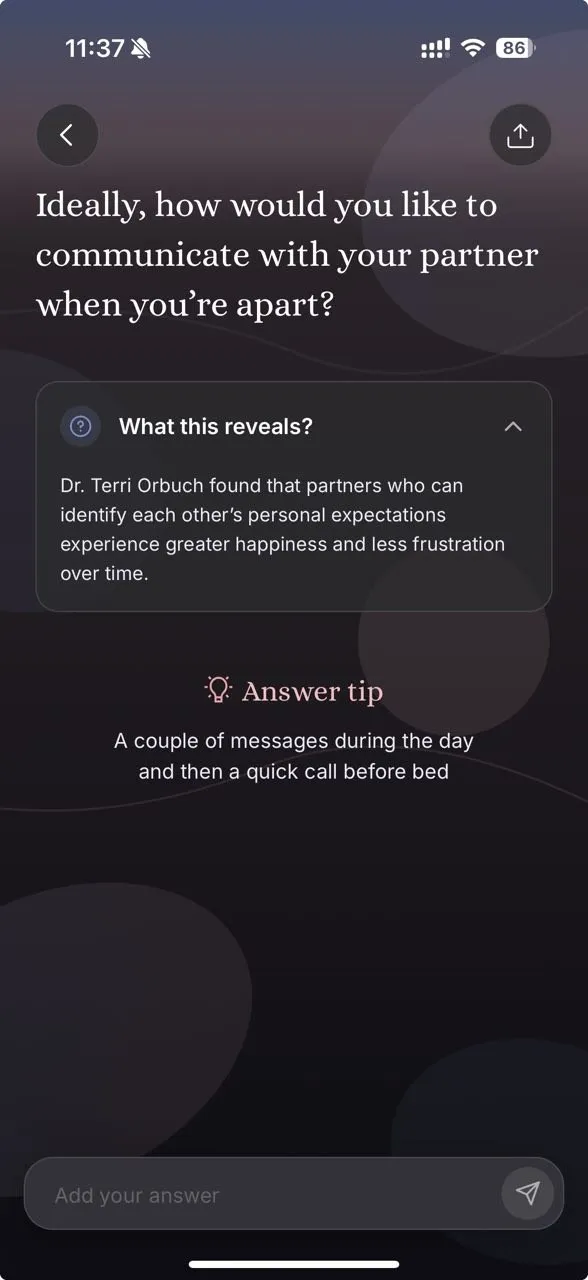
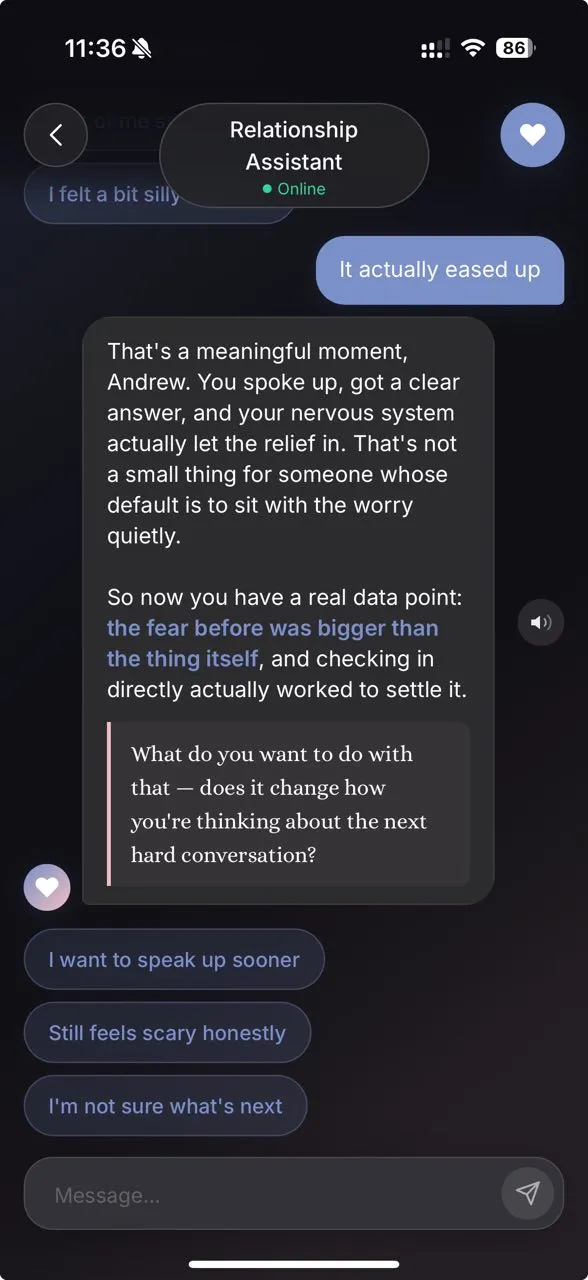
This is where a few tools can help without replacing real conversation. Books like Attached by Amir Levine give language for attachment patterns, a licensed couples therapist can guide deeper repair work, and apps built specifically for couples can supply the daily structure that's often the missing piece. Cuddle, for example, uses short daily questions and a private relationship assistant to help partners practice exactly this kind of vulnerability in five to ten minutes a day — useful as a supplement, not a substitute, for the harder conversations.
When to Seek Extra Support
Self-guided tools help, but they have limits. If fear of intimacy is tied to trauma, active addiction, or a relationship in crisis, a licensed therapist trained in EFT, CBT, or trauma-informed care is the right first call, not an app. According to the American Association for Marriage and Family Therapy, couples therapy shows measurable improvement in relationship satisfaction for the majority of couples who complete it consistently. Apps and books work best alongside that kind of professional support, filling the daily gaps between sessions rather than replacing them.
There's no single right way to work through this. Some people need months of therapy first, others just need a partner willing to sit through one honest conversation. Either way, the goal isn't to eliminate fear completely — it's to stop letting it make all your decisions for you.
Want a Daily Way to Practice This?
A five-minute daily ritual built around emotional intimacy, designed for two real partners.
Explore Cuddle for CouplesDisclosure: This page contains affiliate links. We may earn a commission at no extra cost to you.